Showing posts with label futures. Show all posts

Wednesday, July 27, 2022

Hidden Megatrends and Probable Futures


Reading the July 2022 Australian CSIRO megatrends report reminds me of other trends that are rarely considered when predicting probable futures. For example, the following trends are likely to have a surprising impact on our lives over the next decade or two.

Outer Space Exploration - Planned exploration, commercialisation and militarisation of space for the next decade is significantly more than most people probably realise. Through initiatives such as the Artemis Accords many more nations than in the past are involved in missions to Cislunar space, the Moon, Mars and other bodies within the solar system. 

The Hubble and Webb telescopes have increased public interest in exo-planets and acceptance of the high probability of extraterrestrial life. Perceptions of our place in space are changing. 

Inner Space Exploration - Interest in consciousness studies, quantum realities and new cosmologies has been growing steadily in recent years. The validity of decades of research into Life After Death and the Paranormal is being reinforced by personal experience. The notion that humans are multidimensional beings with capacities far beyond those which have been generally accepted in the past is gaining momentum. 

Prevailing scientific assumptions about the relationship between consciousness and the body are being questioned in many disciplines. And there’s an increasing recognition that our inner world impacts our outer world in accordance with contemporary understandings of quantum reality and consciousness studies.

Disclosure and Transparency - Since 2001 the disclosure of institutional and organisational knowledge of hidden UFO and extraterrestrial activity has been steadily increasing. The extent of government, whistle-blower, experiencer and research revelations over the last five years have surprised many who have followed these issues for decades. 

It’s becoming clear that much more is likely to be revealed over the next decade. Public interest in exo-politics and exo-diplomacy is also likely to increase. UFO disclosure has profound implications for issues such as energy use, militarisation and climate change to name just a few.

Worldview Expansion - In these times of fake news, disinformation and sensationalism many are questioning fundamental beliefs and assumptions. This questioning is also partly driven by the increasing realisation that past thinking and behaviour will not address current global challenges. 

A shift from national to planetary to galactic perspectives and cosmologies is evident - as is a retreat to the apparent safety of “the good old days” for some. There’s a call to move beyond disciplines and research methods that are grounded in positivistic materialistic worldviews and cosmologies. 
Exo Studies is an example of a multidisciplinary post-positivist scientific approach.

Saturday, January 1, 2022

2022 - Same Planet, Different World


The world changed in many ways during 2020-2021 and so did the views and beliefs of millions. One change which isn’t widely known concerns UFOs. As the UFO story continues to unfold it’s likely to change our world.

The new ‘UFO Office’ within the 2022 US defence bill points to some significant shifts in dominant (western) beliefs and assumptions about the world in which we live. Worldviews have been expanding in recent decades to include new understandings of studies in consciousness, quantum realities and the cosmos.

An emerging ‘galactic worldview’ moves beyond an Earth centric notion of evolution to a galaxy full of intelligent life. NASA has consulted theologians to advise on how humans will react to news that intelligent life exists on other planets.

The historic release of confirmed UFO videos by the New York Times in 2017 and the US government’s June 2021 public admission that UFOs (now called UAP) ARE REAL signify deep changes in the way many people are seeing and experiencing reality.

In a sign of a weakening UFO taboo, award winning investigative journalists have written news stories and books covering decades of UFO research. In 2021 Australian Ross Coulthart published ‘In Pain Sight: An investigation into UFOs and impossible science’ as well as related documentary films some of which reached some very large audiences.

The 2020 documentary ‘The Phenomenon’ is one of many that bring a credible story of UFOs to larger audiences.

While much public UFO conversation is currently dominated by nuts and bolts physical evidence there are many groups discussing a wide range of issues that recognise decades of research, recently released classified documents and the validity of information from those who have experienced UFO related phenomena.

It seems likely that public awareness and conversation of UFOs and related phenomena will now progress through stages beginning with the following.
  1. UFOs are real and some are most likely off-planet in origin with very advanced energy sources and manoeuvrability
  2. Consciousness plays a major role in UFO and related phenomena
  3. People have had close encounters with UFOs and their occupants
  4. Some groups/organisations have ‘meta-materials’ that are most likely off-planet in origin
  5. Some groups/organisations have recovered crashed/landed off-world vehicles
  6. Some groups/organisations have recovered non-human/ET bodies
There are indications that this public conversation will become much more widespread during 2022. 

Those that comfortably engage with this conversation are likely to embrace (or already embrace) a more galactic worldview with very different beliefs about the nature of the cosmos. This more galactic worldview allows for the possibility of off-planet intelligences, including some visiting Earth. 

Governments and organisations that continue to publicly deny the reality of UFOs are likely to lose credibility.

Many groups and organisations have taken the UFO/UAP conversation much further than the 6 stages listed above. Participation in those conversations is like being in a different world. A world with very different approaches to many of today's global challenges and very different ideas for a future planet Earth and humanity within the Milky Way Galaxy.
 

Tuesday, April 27, 2021

The Disclosure Project - 20th Anniversary Reflections

 
Listening to Steven Greer's recent 20th Anniversary Disclosure Project Webinar provided the opportunity to reflect on my perceptions of where UFO/UAP/Exo thinking has and hasn't changed over the last two decades.

Investigative journalist Paola Harris asked why many are still waiting for disclosure when it happened 20 years ago - and if you did your research even long before that.

For much of mainstream media and science it appears nothing much has changed in 20 years but for those who are open to listening there have been significant shifts in the acceptance and understanding of the UFO/UAP issue.

A number of speakers during the 5 hour webinar noted the following changes.
  • Concerning shifts in 'official' UAP narratives from denial to "a possible threat to national security"
  • A more nuanced view of 'official disclosure' that involves different factions with different agenda
  • A shift in evidentiary focus from UAPs exist to "some are clearly off-world"
  • A increasing shift from "Are there UFOs?" to "Craft are operated by a wide range of intelligent beings from different off-world cultures."
  • A shift from "there's evidence indicating off-world craft" to "there's evidence of a mix of both man-made and off-world craft"
  • A growing recognition that the study of UFO/UAP/Exo is linked to consciousness studies and a range of other anomalous phenomena  
  • An increasing understanding that UFO/UAPs are controlled by intelligent sentient beings and that 'other-world' may be a better term than 'alien'  

Another significant shift noted was the recognition of the links between the UFO/UAP issue and challenges facing humanity and the planet.

The urgent need to access and use unacknowledged reverse engineered UAP technologies to address planetary issues was mentioned by several speakers.

Carol Rosen talked about the need to advocate for peace in space at a time when the public militarisation of space is progressing quickly. According to Rosen "both China and Russia have announced they would sign an agreement to ban all space-based weapons, with now over 100 countries also agreeing to ban all weapons from space."

Several speakers talked about the need to reach out to people in other countries and to question the "countries as enemies" narrative. We are one human family and perhaps with our expanding awareness "One Universe One People" as  Steven Greer says.

Timofey Egorov spoke about the benefits of people across the planet engaging in international social networking to discuss 'The Ethics of the Cosmos' to promote peaceful co-existence in outer space.

He spoke about the importance of uniting research into unknown phenomena of nature, cosmos and human abilities - an 'Ecology of the Unknown' - to contribute to the evolution of humanity.

Carol Rosen and several Russian speakers pointed to evidence that UAPs have stopped nuclear accidents and nuclear tests in space and that nuclear tests are very likely damaging space/time and possibly other dimensions.

Humanity is said to be viewed by some other-world civilisations as a risk to Earth and the cosmos in this and other dimensions. This is probably one of the reasons they have increased their observations of and contacts with Earth since 1945. Rosen suggested the need to shift from a military economy to a space economy.

Daniel Sheehan suggested that we shouldn't start the next stage of the human experience - which will likely involve meeting extraterrestrial civilisations - by taking weapons into space.

He called for people to question the agenda behind UAP narratives - whose interests do they serve?
This was echoed by Paola advising that when you see new disclosures ask yourself "What is the agenda here?"

A final shift I'll reflect on is a move toward personal empowerment and advocacy that is driven by the need to address current challenges facing humanity at local and global levels. This has taken the form of the development of
  • various international disclosure initiatives 
  • increasing respect and greater diversity among those discussing exo topics
  • contact protocols and tools used by groups across the planet
  • well researched publications and documentaries
  • disciplined study and discourse such as exo studies and exopolitics

In summing up the 20th Anniversary Disclosure Project Greer and Sheehan asked:

"How much longer are we going to be killing the planet and engaging in endless wars before we come together as a human family? Before we join with other sentient beings in other-world civilisations?" - Steven Greer

"How can we as a community mobilise without being hostile or antagonistic to raise the consciousness of humanity?" - Daniel Sheehan


Thursday, September 3, 2020

Human Galactic Histories: Part 1 - WHY?


There are many ways to explore UFOs. Sean Esbjörn-Hargens offers an Exo Studies Master Course that uses a multi-disciplinary approach within a meta-integral framework to explore UFOs and related phenomena.

For me one of the most powerful lenses to engage with during this course has been that of story - in particular history.

Much has been written about advanced civilisations in prehistory and galactic history. For many people however, these writings are assumed to be the stuff of legend, myth, fantasy, science fiction or delusion. This is often because people hold worldviews that exclude any possibility of it being actual history.

Presenting strong evidence is not always be an effective way to challenge a worldview. "The eye is blind to what the mind does not see." We hold on to our stories.

The Exo Studies multi-disciplinary approach to UFOs seriously challenges such limiting worldviews. In doing so it can shatter existing generally accepted stories that help us to make meaning of our realities and experiences. This can leave one feeling uneasy about what we know. Without coherent stories we can be left floundering in a vast ocean of apparently disconnected evidence.

For me as I digested the compelling evidence and began to embrace new perspectives it was important to have new stories that made sense.


These short prehistory and galactic history videos focus on some of those new stories. (Actually most of these stories are quite old.) They are an attempt to make meaning of the greatly expanded worldview that UFOs present.

In addition I found that the stories themselves were challenging my beliefs and assumptions in ways that sometimes evidence alone didn't. Story has a way of resonating with the heart and body that can be more convincing than evidence in the head. Story can be very powerful, speaking to the deeper or whole being.

I find there's a coherency across these histories that begins to build a meaningful meta-story from within an emerging galactic worldview. I believe there's much we can learn from this meta-story that could be applied to current global challenges and the co-creation of preferred futures.

For example reflections of events from the Orion Wars, Maldek, Mars, Lemuria and Atlantis appear to be playing out today. They may even be projections from unrecognised and unresolved trauma from the deep past. Some may say "those who are not aware of galactic history are in danger of repeating it" - or perhaps at least being triggered by it.


Finally, I chose these particular Galactic Histories because there is strong multi-disciplinary evidence that supports the stories. This helps me to both 'ground' the stories and flesh out the emerging meta-integral framework with which I am engaging.

More background and referencing for these galactic histories is available as a slide show in PDF form.
  

Friday, June 5, 2020

In the Wilds


I've been imaging alternative futures in a workshop that's part of an extraordinary online international conference The Wilds Beyond Climate Justice.

The collaborative workshop task is to imagine the life of a character who is a second generation descendant living on Earth in 2080.

My contribution has been informed by my experience in other workshops/events at this conference. For example in the opening 'acknowledgement of country' Ruth Langford spoke of country as the seen and unseen, the subtle and the multidimensional.

Bayo Akomolafe in A Cartography of Exile spoke of post activism, transfabulation and the importance of offering stories that are alternative to mainstream.

Daniel Floor in Breathing With the Dead spoke of the importance of the voices of the ancestors both human and non-human.

Will See and Iyafalola Omobola in Empowering the People spoke of the importance of examining individualism, materialism and the spiritual.

My contribution has also been strongly influenced by my recent participation in an Exo Studies Master Course with USA academic Sean Esbjörn-Hargens which examined the wilds of UFOs and anomalous phenomenon in the multidimensional universe within a meta-disciplinary framework.

Needless to say I'm letting my imagination roam freely in the wilds.
And yet there is so much more...

Exciting times!


Sunday, March 29, 2020

Exo Studies for Understanding Extraordinary Times


Making sense of these extraordinary times is one outcome from an Exo Studies Master Course I just completed.

While a central focus of this course was UFOs/UAPs/ETs/EDs/NHIs it resulted in new perspectives and 'bigger pictures' for a range of personal and global issues.

In terms of UFOs it's clear we have known a great deal about this phenomenon for decades. Exploring 'UFO denial' highlights much that is in shadow across society and culture - although perhaps not for much longer.

The course encouraged me to take a step back, breathe and engage the heart before jumping to conclusions based on outdated habitual thinking.

Underpinning beliefs and assumptions were questioned leading to the transformation of my worldview to accommodate a range of phenomena and experience which previously made little sense.

I now have a much greater understanding of various agenda playing out on this planet. I find I can more comfortably assess sensational claims, discern disinformation, engage in meaningful discourse and make informed choices.

This allows me to remain more centered, compassionate and peaceful in these uncertain times. My expanded worldview is both holistic and galactic revealing new possibilities and realities. This helps me to navigate life, brings clarity to my being and doing, and assists in the co-creation of preferred futures.

A new website, WhatsUpWithUFOs provides quality links for those wanting to explore exo topics.

Exo Studies Master Course information is at https://www.exostudies.org

Thursday, March 26, 2020

Exo Studies Course - Reflections and Directions


Act Local, Think Global, Be Cosmic!

These are my reflections and possible next steps having recently completed an Exo Studies Master Course.

"Exo studies is the metadisciplinary study of all the anomalous phenomena that lie outside our current models of explanation and views of reality."

Topics included ETs (extra-terriestials), EDs (extra-dimensionals), UFO/UAPs (unidentified flying objects/unidentified aerial phenomenon), consciousness studies, conspiracy theories, disinformation, and much more.

How has my thinking/worldview changed?

Although my dominant worldview coming into this course could be described as holistic/integral and within which parapsychology, advanced prehistorical civilisations and celestial intelligences were accommodated, ETs represented a gaping hole in my knowledge and understanding of the bigger cosmic picture.

I now believe that a more holistic and galactic worldview will be essential in navigating the 2020s. Exo Studies topics help to make sense of these turbulent times by encouraging one to step back, look for new perspectives and embrace multidisciplinary approaches.

The course provided me with a deeper understanding of the limitations and potentials of integral frameworks when engaging in critical and open thinking, and navigating weirdness. It created a safe space for considering multiple perspectives and possibilities, rather than jumping to answers or falling back on old beliefs.

What were my favorite topics?

All topics in the Exo Studies Course were intrinsically interesting as was the process of exploring links between topics and bigger picture frameworks. 

I was also able to link topics to areas I had previously studied such as transpersonal psychology, integral theory, parapsychology, advanced prehistorical civilisations and spirituality. 

For me galactic history, ET/ED diversity, galactic agenda and exopolitics were some of my favourite topics. This is probably because I believe they lead to larger contexts and understandings that are directly relevant to contemporary global challenges and the conscious evolution of humanity.

Galactic humanoid history in particular integrates well with my understanding of Earth's long prehistory of advanced civilisations.

What would I like to see more of? 

I believe the important topic of our time is the evolution of human consciousness. This involves the evolution of Earth/Gaia and its web of life. The evolution of human consciousness necessarily involves the journey of the galactic human family.

A great deal has been written about the great awakening, systemic transformation, Christ/Buddha consciousness, end/beginning times, cosmic cycles of growth, enlightenment, the divine feminine/masculine and 'ascension'.

In fact the very existence of the Exo Studies Course could be seen as an expression of the evolution of human consciousness.

What are my biggest takeaways from the course?

  • It's possible to make sense of many apparently weird Exo Studies topics rationally, emotionally and spiritually within larger frameworks.
  • You can always question even your most cherished beliefs and assumptions.
  • There's some truth in most Exo Studies related stories although they are best held lightly.
  • Emergent and emerging thinking across 21st century disciplinary, interdisciplinary and transdisciplinary fields is very different from the past. For example new thinking in cosmology, ecology, physics, consciousness studies increasingly takes post-positivistic approaches.
  • My own inner guidance/resonance is a reliable pointer in navigating Exo Studies related topics.
  • Sean Esbjörn-Hargens brought credibility to exo studies - as did many of the course's participants.
  • I strongly support grounded compassionate inquiry.

What are my next steps?

Over the last few years my learning has been focused on conscious evolution, understanding challenging global issues and building sacred relationships. I've been a frequent visitor to Gaia.com and have done some courses including Metaphysics and Mystery, A Course in Miracles and A Course of Love.

During the Exo Studies Course I've also been involved in visioning processes to explore possible directions for what I believe will be an historic next decade. The following graphic indicates some of the passions/drivers moving me forward.

Click to enlarge

As this course closes I find I'm now asking myself new questions related to ETs and EDs.

I also notice I’m much more comfortable responding to Exo Studies related questions from friends within a context of helping people make sense of their own experiences - internal and external.

I've found that Lyssa Royal's Galactic Heritage Cards are a very comfortable and fun entry to deeper conversations related to personal and global issues with links to many Exo Studies topics. The new What's Up With UFOs website will provide a fantastic resource for those who want a deeper dive.

If it takes a village to raise a child, perhaps it takes a planet to raise an adult, and a galaxy to raise humanity.

Moving forward I'm becoming more interested in exploring decision making and co-creation within a multidimensional holistic/galactic worldview.

I'm interested in holistic/integral education and the potential of immersive virtual worlds to provide opportunities to inhabit an holistic/galactic worldview.

For me the bigger picture involves the move of Earth/Gaia and humanity to 4D/5D.

In what ways can we thrive and not just survive the 2020s?

Sunday, December 22, 2019

2020 Vision


2020 and the 2020s are poised to be surprising transformational years for most of humanity.

The following emergent and emerging global trends are likely to shape this transformation.

Disclosure of global secret agenda
  • Hidden groups and organisations are being revealed.
  • Self serving agenda are becoming more transparent.
  • Disinformation is less likely to trigger emotional responses or be believed.
Expansion of consciousness
  • Consciousness is consciously evolving.
  • Indigenous knowledge, ancient wisdom traditions and spirituality are increasingly valued.
  • Long standing assumptions and beliefs are being questioned, worldviews are expanding.
Awareness of a larger Self
  • Psychic ability and higher sense perception are accepted as normal.
  • Subtle energies and extradimensional beings are recognised.
  • Unity of consciousness is more widely accepted.
Empowerment of individuals
  • Localisation and globalisation are increasing individual participation and co-creative.
  • Activism is becoming recognised as a full spectrum of subtle and overt being and doing.
  • Love is increasingly chosen over fear, compassion over judgement, openness over closed minds/hearts.
Emerging cosmologies
  • The universe is experienced as holographic in nature.
  • Humans are seen as multidimensional beings.
  • Humans have a galactic history, a galactic family and a galactic journey.
Systems change
  • Climate change continues to highlight dysfunctional beliefs and systemic failures.
  • Social, political and economic systems will continue to adapt or disintegrate.
  • Species extinction reflects a changing planet.
Technological change
  • Zero-point energy and antigravity devices become a reality.
  • Artificial intelligence (AI) and robotics develop rapidly.
  • Regeneration practices are increasingly important.
Healing modalities
  • Vibrational medicine
  • Holistic healing
  • Multidimensional healing
The above trends may trigger news and events that will surprise, confuse (and possibly anger), challenge and enrich humanity during the 2020s and beyond.

For example, the following are most likely to become public knowledge over the next decade.
  • Secret global organisations and self serving agenda.
  • Ongoing planetary changes and ongoing denial/spin/control responses.
  • Alien races, alien technologies, alien contact and alien relationships with Earth.
  • Advanced prehistoric civilisations on Earth.
  • Emerging new systems replacing decaying old systems (social, economic, political).
  • Use of psychic skills and higher sense perception.
  • Galactic human history and the galactic human journey.
  • Multidimensional existence and the evolution of the multiverse (omniverse).

For some this will turn their notion of reality upside down.
Others will welcome the news because it affirms a reality they have long sensed.

It will be a decade requiring open minds and open hearts, critical reflection, conscious choice, compassion, generosity and love.

It will be a decade during which humanity remembers much that has been hidden or forgotten.

It will be a decade of learning to choose love over fear.

Thursday, August 1, 2019

A Climate of Emergence

A Personal Response to the ‘Climate Emergency’


My city council has joined many cities, councils, universities, doctors, hospitals and business around the world in declaring a ‘Climate Emergency’.

While many people now accept that climate change is an important issue few feel able to do much about it. I believe everyone can contribute in their own way - and many are.

Terry Patten believes many live within a ‘Consensual Trance’ that tacitly accepts ‘official’ narratives (however unfounded they may be) and encourages us to repress, deny or reject inconvenient truths.

This consensual trance has its roots in the beliefs, assumptions and worldviews that are several hundred years old. These eventually generated the interconnected complex systems of western culture that many now recognise no longer serve humanity and are degrading the planet.

Complex systems are hard to shift - partly because they require ‘systems thinking’ to understand them and partly because they are underpinned by personal and cultural beliefs and assumptions that are generally unquestioned.
The Buddhist notion of a ‘Hungry Ghost’ captures another issue that drives existing social systems and cultures - and contributes to an early World Overshoot Day.

People behaving as a hungry ghost have an insatiable desire driven by the need for deep meaning and purpose in life. They attempt to fill this inner void by consuming things and experiences that give short term comfort but that can never satisfy the soul. There are many hungry ghosts on earth today.

Deep seated fears also play a role.  Aspects of contemporary western society reflect the personal and collective fears of lack or attack borne of a strongly held belief in the separation of self from others and nature - within a purposeless universe. This drives competition, exploitation of resources, fear of the other and annual global military spending of US$4.9 (AU$7.2) billion dollars a day.

Our beliefs and assumptions are embedded in our stories - stories that need to be changed if we are to successfully address the ‘climate emergency’ and related global challenges.

Fortunately there are new stories based on discoveries made over the last century that speak of the fundamental interconnectedness and consciousness of everything.  The universe and life are interpenetrating wholes. These new stories are only just beginning to impact contemporary culture.

The new stories reinforce some indigenous knowledge and practice as well as humanity’s ancient wisdom traditions. Duane Elgin believes that "a great transition story can awaken our collective imagination and orient our actions. With a common story, we can see our place and our part; our lives become more meaningful; change is less overwhelming and stressful; and we can see how to cooperate more readily."

One of the new stories is that the evolution of life includes the evolution of consciousness. In some versions of this story humanity and the earth are currently evolving much faster than in the past. Humanity is now conscious of this evolution and can begin to influence its direction through conscious evolution.

Joanna Macy describes ‘The Great Turning’ as the transformation of society, including people’s relationship with one another and with Earth, and links this to an emerging story of expanded awareness, ecological sustainability and social justice. Some estimate there are approximately 2 million organisations now working within this new story to change collective consciousness.

Annick De Witt highlights the "critically important phenomenon of worldviews in the urgently needed transformation to sustainable societies.” Traditionalist, modernist and postmodernist worldviews (or frames) each have valid though only partial perspectives of our world.


Charles Eisenstein believes today’s obsolete though still widely held 19th and 20th century beliefs and assumptions limit our view of what is real, possible and practical thus limiting our options to address climate change and related global challenges.

Addressing climate change requires the emergence of new ways of thinking and being. Albert Einstein noted that we can’t fix problems from the consciousness that created them.

New ways of thinking have emerged from interdisciplinary and transdisciplinary approaches that take us beyond discipline boundaries. Integral and holistic worldviews are including and transcending the perspectives of previous worldviews. Wicked problems, social foresight and futures studies provide new tools to assist in the co-creation of emergent preferred futures.

These new ways of thinking emphasise inclusive discourse, collaboration, co-creation and transformation. Every generation, culture, group, people, nation, gender, discipline... has a necessary and vital voice.

Several big picture stories have emerged with close parallels to cosmologies in both indigenous cultures and ancient wisdom traditions. Big History, The Universe Story, Great Transition StoriesThe Story of Interbeing, Living the New Story, Cosmic Evolution and Evolutionary Consciousness are some examples.

Spirituality (not religion) is a common theme through many of these new stories. They are driving the current global ‘Spirituality Revolution’ which feeds the soul of the hungry ghost providing a coherent sense of meaning and purpose. People are increasingly experiencing a personal spirituality through a sense of the sacred, peace, connection, awe, love or presence in nature and through indigenous practices.

The emergence of a new contemporary spirituality can be seen in Spiritual Ecology, Sacred Economics, Holistic Education, Transpersonal Psychology, Integral Theory, Spiritual Intelligence, Spiritual Activism, Indigenous Wisdom, Global Consciousness Project, Mindfulness, Politics of Love, Pedagogy of Universal Love, Economics of Happiness, Conscious Evolution, Sacred Earth, Fourth Bottom Line, Conscious Capitalism, Conscious Business, and many more.

Spirituality is about unity and wholeness, intuitive wisdom and inner guidance, sacred places and unbroken connections, mindfulness, conscious evolution and awakening, deep peace and joy, presence and purpose, compassion, unconditional love, and much more.

A spiritual perspective on the climate emergency can lead to the emergence of new insights and new possibilities for individual and collective knowing, being and action. Spiritual awareness can provide access to a range of powerful spiritual tools and practices.

Spiritual intelligence recognises the multidimensional nature of life and the universe. It understands there is no separation and little to fear but fear itself. Spiritual intelligence/awareness/insight is more effectively accessed when the mind and emotions are calm and the body is peaceful.

Spiritual practice is unique to each individual. It may be a mindful walk in nature, meditation, positive affirmations, compassionate service to others, physical movement and breathing, active listening, or peaceful quiet time.

A spiritual response to the climate emergency respects a sacred and evolving earth. Any inner work to love self and others complements and strengthens our outer actions.

A spiritual perspective inspires and empowers individuals to express their unique gifts for the benefit of all. Some who hold a spiritual worldview may feel a deep and specific ‘call to action’ while others quietly impact on those they meet on their life journey through their gifts, presence and love.

Contemporary spirituality greatly increases the ways in which every person can help to transform society and meet global challenges with optimism, creativity and joy. It's grounded in the co-creation of preferred futures within our local communities, driven by love and compassion, and empowered through our fundamental multidimensional wholeness and connection.

A spiritual view of the climate emergency sees the opportunity for the evolution of humanity resulting in the emergence of a new awakened consciousness that co-creates the "more beautiful world that our hearts know is possible."

Some say that the planet doesn’t need saving - it needs loving. That's something we can all do.


'Saving humanity' may be more about giving and receiving invitations to awaken into an expanded consciousness through love. It may be more about compassionate respectful listening to people with different worldviews than pointing the finger and identifying 'the cause'.

Breath first, heart next, mind last.

Friday, June 14, 2019

A personal global issues change strategy - Part 2


'Ways of Being’ are just as important, if not more important, than ‘Things to Do’ when it comes to my personal rethink addressing issues of concern such as climate change. 

This is because when moving away from 19th century materialist, positivist and reductionist assumptions and beliefs about nature and humanity we have an entirely different view of reality. No longer are humans separate machines living on the third rock from the sun in a purposeless and largely dead universe. 

Humanity lives as a connected whole interdependent with a living planet within a universe that is interconnected at the deepest levels. The universe is more like a thought than a thing.

How human beings ‘Be’ is as profoundly important as what human beings ‘Do’. In fact how we ‘Be’ often drives what we ‘Do’. 

So my personal approach to climate change and other issues of concern begins with ‘Ways of Being’. Within our deeply connected lives, ways of being can have dramatic and often surprising consequences. One of these consequences is to make the things we do much more effective.

Ways of Being

🔹 Be in Nature

Being in and with Nature builds connection, relationship and respect.
Nature teaches, communicates, calms, heals and reinvigorates.
Commune with Nature's intelligence and planetary consciousness.
Honour the beautiful, mysterious and sacred in Nature.

🔹 Be fully present

Being fully present in the moment enables subtle perception, intuition, insight and a deeper intelligence. Breathe first, heart next, head last.
Mindfulness brings deeper awareness to tasks.
Witness self and others. Take a step back and see the bigger picture.
Be still and listen to Self. Be meditative and centred.

🔹 Be loving, peaceful and joyful

Look for the common good. Forgive self and others.
Love self and others. Be inclusive.
Be discerning not judgmental.
Be myself. Be playful. Be in the flow.
Honour the sacred in self/Self and others.

🔹 Be the change I want to see

Change self, invite others, be flexible.
Be positive and inspiring.
Live in the present rather than the past or future. Letting go.
Read/view inspirational content, meet inspiring people.
Strive for the highest aspirations of the human spirit.
Step into own wisdom and power.


Things to Do

🔹 Make conscious choices

Make sustainable ethical choices for purchasing, consuming, voting, sharing...
Consume local products/produce as much as possible.
Engage in regenerative whole systems gardening practices.
Delete news feeds (digital and traditional) that are sensationalist, repetitive, negative, or contain disinformation.
Choose inspirational content and people. Seek indigenous knowledge, ancient wisdom and spiritual emergence.


🔹 Contemplative practice

Question own beliefs, assumptions and world views.
Holistic practices - body, mind, soul.
Meditate - deep listening, insight, intuition.
Breathing and body movement disciplines.
Walk in nature.


🔹 Provide support to others

Active listening, compassion, positive affirmation.
Give time, skills, dollars.
Facilitating, mentoring.
Social media support - likes, shares.


🔹 Personally meaningful participation

Build positive relationships.
Follow individual calling/passion.
Maintain personal well-being.
Where does my deep gladness meet the world's deep need?


🔹 Co-create preferred futures

Envision together. Conscious evolution.
Participate respectfully, inclusively and positively.
Create the new rather than fix the old.
Share inspirational stories and journeys.

(See previous post on this topic.)

Friday, January 13, 2017

Droning On - Part 1: Introduction

I'm going to learn how to use a drone - and blog about my journey.

Immersive and interactive media are raising user expectations for a richer and more meaningful visual experience. Images and videos taken with drones are part of this change.

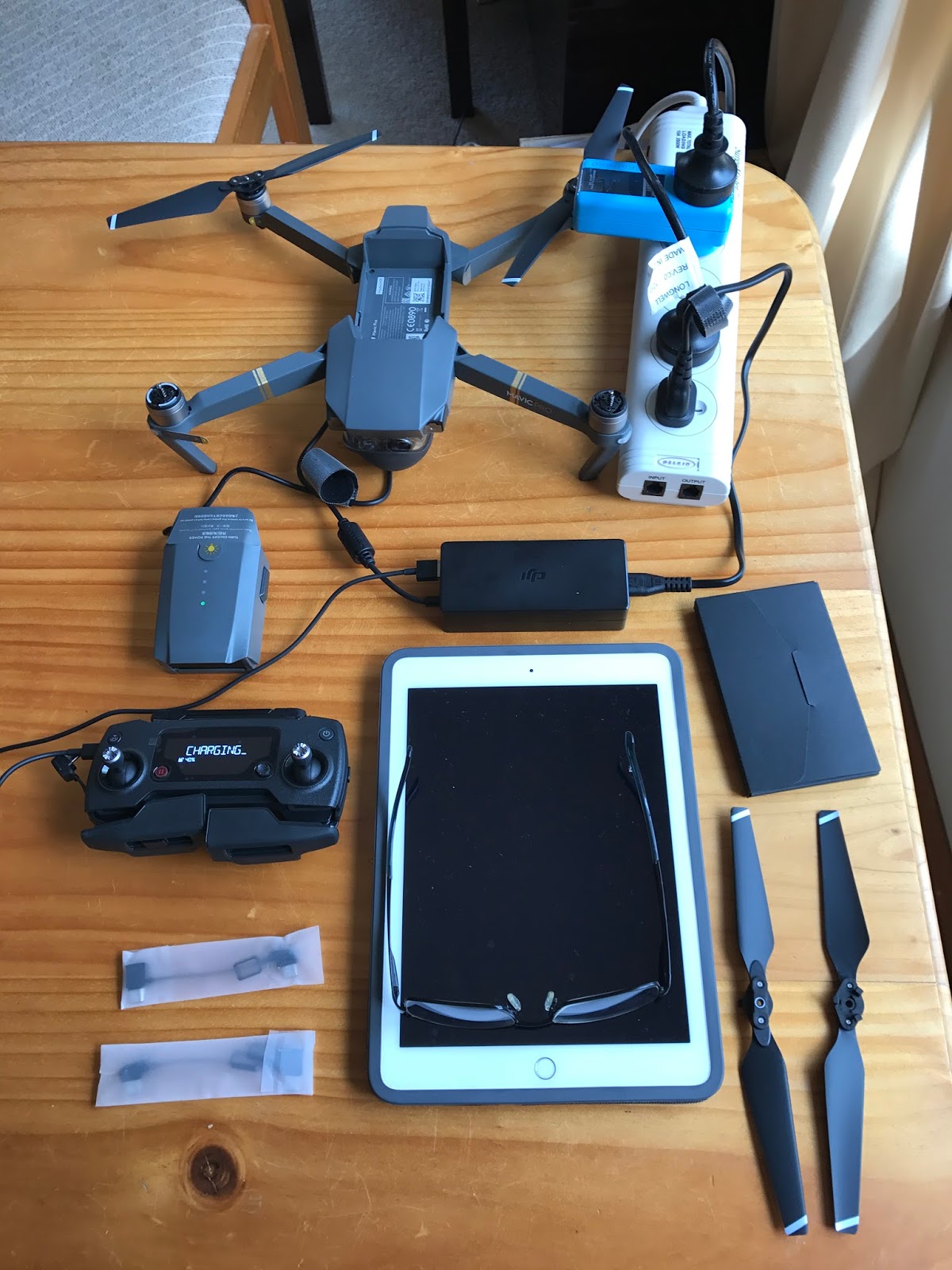
I've just taken delivery of a DJI Mavic Pro drone - or RPA (remotely piloted aircraft).

CASA released updated guidelines for the recreational use of drones/RPAs in Australia late last year.

Just before Christmas Flight safety Australia published Dirty Dozen: 12 ways your drone can land you in trouble so it's not just a matter of unpacking a drone and taking to the skies.

The DJI Mavic Pro at 1.6kg  is classed by CASA as a 'very small RPA (100g - 2kg).
CASA has an eLearning module for the 'sport, recreational or educational' use of 'very small RPAs/drones.

CASA eLearning Module

Now it was time to read the DJI Mavic Pro documentation and unpack the drone.

The DJI Mavic website has a collection of promotional and tutorial videos which were very useful while reading the user manual and unpacking the drone.

Once propellers had been attached  (matching propellers to the correct motor - white circle marks) and the remote controller prepared to was time to charge the batteries.

Attaching propellers and charging batteries
There was plenty of time for more reading and videos while the devices were charging.

Saturday, February 27, 2016

Next Gen Government - Day 2 Takeaways

A small edit to the Waterforms International Water Vortex while waiting for departure at Canberra Airport. Somehow it feels appropriate for this post... See quote at the end.
These are some random thoughts I'm taking away from the second day of sessions at #NexGenGov in Canberra. These mostly relate to our current Department issues/projects rather than a comprehensive report on what was said - or who said it.

Innovate on service delivery not technology. 

Focus on customer events, circumstances, their journey...
Identify services with the highest impact. 

For many external clients (and even staff) your website 'landing page' is the Google search results page. 

The Department has Google+ pages for all schools and this has been very effective.
How might we influence/customise Google search results for the Department's main public online web and other online spaces? How could we use Google Ads and APIs?

Does current navigation make sense to the user when they drop deep within our website/CMS from an external search engine?
Need for a rethink...

The 'Internet of Your Things' offer opportunities to rethink aspects of service delivery.

Young people (including young adults) do not generally go to a government website for help.

How do we reach out to this group? Go to the platforms and places used by your intended audience.
Social media? Which platforms are being used by your intended audience? What value can you bring?

Gamification? Mobile Apps?  See Party for Your Rights.

The notion of a 'one stop shop' may become the 'one stop pop-up shop'.

Proactive Organisation - provides a product or service when it is needed rather then after it has been requested... 

Innovation SPRINT - 10 days - Discover, Define, Develop Ideas, Deliver Alpha.
Trans-departmental teams, design thinking, blue-sky thinking by 'digital natives'.
Leave space in thinking, processes and solutions/products for innovation.

Drive rapid iteration.

Overcome the fear of failure - "fail fast, fail cheaply".

3 steps to making 'good mistakes'
1. making mistakes after due care and attention
2. acknowledging mistakes
3. not repeating mistakes

Common current drivers are fear and hope - fear of disruption/disconnection/disengagement - hope for transformation.

Launch Alpha to selected audiences - even public- and then move to 'perpetual beta' or launch Beta and then move to ongoing interative development.

Gartner predicts 75% of digital organisations will 'build' not 'buy' by 2020.

See the US Digital Services Playbook - "Today, too many of our digital services projects do not work well, are delivered late, or are over budget. To increase the success rate of these projects, the U.S. Government needs a new approach. We created a playbook of 13 key “plays”...  "

Social Media

Think about archiving social media - have information management policy/procedures for social media. Think about minimum meta tags for social media.


See national Digital Continuity 2020 Policy and actions/dates.

Open Source, Open Data, Open Culture, Open Government

Open source is about much more than software. 
Tasmania has a new Open Data Policy

In what ways are we benefitting from and contributing to the staten national and globalopen agenda?
During 2016 the Department will be seeping its adoption of Creative Commons Licensing. How might this facilitate a more open culture and enable changes in service delivery?

AI, natural language and the user interface

How far away is a Siri/Cortana user interface for organisations?
"What can I help you with?"

Digital Identity and Authentication

Biometrics is delivering higher confidence authentication

One identity and login for multiple government services...

Watch MyGov, MyTax, My Health Record over the next few months and years...

Google ID, Apple ID, Facebook Connect... are already international IDs and logins.

Blocks to innovation and faster development.

A focus on fully tested perfect solutions delivered years into the future.

A focus on how to monetise assets rather than what we can do that's best for citizens/clients.

Being risk averse about privacy and security issues rather than using 'Privacy by Design' principles, getting it right, and then moving on. 

"Silicon Valley is a state of mind not a place."

Jack Welch

“If the rate of change on the outside exceeds the rate of change on the inside, the end is near.” ― Jack Welch


Thursday, September 17, 2015

Not another website

The next evolution of the Department's public website is being considered. But much has changed, and significantly changed, over the three years since the last build.
 
The content management platform is now complemented by a range of online services that make up the Department's managed online presence and identity. Social media has grown nearly 1,000%. Mobile access now dominates public access. Global cloud services provide new agility.


My hope is that this next evolution will not result in another website.

We need to integrate these complementary services so that the user experiences a seamless Department presence and identity that delivers useful information and services.

We need to maximise the benefits that participative media brings to communication and community.

While there will undoubtedly be some traditional web pages I'm interested in exploring what a vibrant online presence and identity might look like, feel like and be like.


Have we challenged our assumptions and asked the necessary questions?

How do we strategically plan an agile sustainable system that is useful and engaging?
 

Some drivers of this strategic planning may be...

  • Learners first - the Department's core business is learning. Learning services for anyone, anywhere, anytime.
  • Users first - the Department's Strategic Plan focuses on meeting client needs and expectations, saving users time
  • Mobile first - mobile access now dominates public access to online information and services. Many users have mobile-only Internet access.
  • Google search first - most users try Google search first to locate Department information, locations and services (Google Services)
  • 90% of users access 10% of content - the majority of users access a small proportion of the Department's content
  • Social media - access to department's social media channels has increased nearly 1,000% over the last two and a half years (Social media services)
  • Effective searching - users expect to quickly find the most relevant search results
  • Story telling - the power of stories, narration and video
  • Compliance - there are new higher standards for web accessibility and design, Creative Commons and open data
 

Recent developments in technology offer new possibilities...

  • HTML5 - offers responsiveness across most devices
  • Tags - increase search usefulness
  • News feeds - choose your own device and reader
  • Interactive video - choose your own learning adventure
  • User customisation - saved settings for different audiences and interests
  • Mobile apps - add your own content
  • GPS - location aware features
  • NBN - Tasmania is becoming well connected
  • Augmented reality - access layered information, Web 3.0 - an intelligent web of things
This is a wicked problem  :-)

Sunday, August 30, 2015

Where to from here? A wicked problem

A great deal has changed in the ICT space for our schools over the last two years - the rise of social and mobile media, the use of cloud services for the effective and efficient delivery of agile infrastructure, and the interest and influence of large national and multinational companies - to name a few.

At the same time there's been a more gradual but just as profound change in society and culture as a result of the pervasive and often invisible ICTs. The trends and expectations I see in my role can be summarised as follows.


New approaches are required. This challenge has the characteristics of a ‘wicked problem’.

It is a moving target and is socially complex. It involves changing values and new behaviours.

It challenges current boundaries and policies, questions assumptions, and there may be no single ‘solution’.

 
To understand wicked problems I like the analogy of playing a ball game.

You are focussed on the ball and reaching the goals...
You build personal and team skills and become strategic.

Then the goals move - but you are not distracted and remain focussed on the ball...

You sense the ground shaking under your feet - but you skilfully adapt and approach the goals.

You kick a brilliant goal and raise your arms! But all is quiet...

As you look around you notice that half the players have gone...
The stadiums are largely empty.

The crowd are watching a new game being played on a different field some distance away.


The use and support of digital media for education is a wicked problem.

Photo: Creative Commons - Wikimedia

Saturday, August 29, 2015

Social Media Use Snowballing


In my current digital media role it has become apparent that existing support models for our digital media channels are no longer sustainable – or even desirable in some cases.

The uptake of social media for example has been dramatic - a 1,000% increase in official Facebook use in a little over two years. And that's just Facebook.
Key changes over the last couple of years include:
  • Decreased access to public websites
  • Increased use of and dependency on, school intranets
  • Dramatic increase in the use of social and mobile media
  • Increased public expectation that Google search should provide basic contact information
  • Increased disatisfaction with PDF newsletter access on mobiles


Website access is moving from desktop to mobile and public access to websites has dwindled.
This pie chart from last year gives a graphic view of the public access to different online department information channels. School satisfaction with traditional public websites has dropped to 45% while satisfaction with public Facebook pages is 90%.

During school closures earlier this month more than 80% of public access to updates was via mobile devices. There were nearly half a million views across school Facebook pages and the official school closure blog in 3 days.

Average monthly views of official public Facebook posts across the department are approaching 1,000,000. YouTube video views have more than tripled over the last two years.

In what ways do we need to change support models to accommodate these rapid shifts?
How much time and effort should we spend on traditional websites?

Website analytics indicate only a small percentage of our information is regularly accessed.
What are the new purposes and audiences for traditional websites?

Do we need to revisit our social media risk management processes and resourcing?

Do we need to question some of our fundamental assumptions about how we resource online digital media?

What new opportunities are there with a communication channel that has one million views a month?

Saturday, March 3, 2012

The LMS in a 2012 DLE


Where does the LMS sit in 2012? The need to consider post WebCT options, cuts to budget and IT support, student and teacher preferences, changes in learning and 'delivery', new national VET eLearning agenda... has led us to explore a more organic and distributed learning environment.

Yesterday Joyce Seitzinger in her post The LMS as a mixing panel for social learning touched on other drivers that have also contributed to the development of a new project that will provide an integrated range of online learning services for staff and students in 2012.

The following 6 min video describes the stage 1 implementation of this project that has just begun.


Will this model give us the agility we need to continuously co-create the online learning services that are required to 2015 and beyond?
Will this model be effective and sustainable?

Wednesday, September 14, 2011

Are We There Yet?

Can we begin to define our approaches to 21st century learning from experience? Developing an eLearning Strategy that takes us to the middle of the second decade has involved looking back to see what go us to where we are now.

In the late 90s and early into this new century we valued flexibility, sharing, collaboration, problem solving, future proofing... Looking at these now they appear to be largely reactive. They were our response to rapid change and the hazy emergence of new perspectives and paradigms; new ways of thinking, doing and being.

Now that we have a little experience of this century can we see trends more clearly and be more discerning and confident about how we respond?

I wonder if we are starting to make more sense of our current times and are more comfortable living with change. We are beginning to explore new possibilities and map new journeys. We are beginning to be more proactive and purposeful. We understand a little more about how to not only live more comfortably but to prosper during rapid transformational change.

Being flexible while we adapt to changing environments is shifting to being more agile - taking purposeful steps on journeys through change.

Future proofing solutions against change has become future building as we leaverage the opportunities provided by constant change.

Solving problems of increasing complexity has led to more systemic thinking and problem prevention.

Questioning one-size-fits-all solutions has led us to question our perspectives, underlying assumptions and world views.

Is planning for learning in the second decade of this century about a shift to include more pro-active strategies such as those on the right hand side of the list below?

Flexibility --> Agility
Future Proofing --> Future Building
Problem Solving --> Problem Prevention
Collaboration --> Co-creation
Social Justice --> Social Inclusion
Questioning Solutions --> Questioning Assumptions
World's Best --> Best for the World

In what other ways have we become more proactive and purposeful?
How else has our thinking, doing and being changed?
How do our new understandings impact on the development of elearning?

Or is it too early to tell?